
An artist of protean expression
As one of the main members of the Kyoto art scene, Insho Domoto was active for a large part of the 20th century, finally building this museum to house his works in 1966, in his twilight years. Both the exterior and interior were designed by Domoto to his own unconventional tastes, which included creating the building’s façade in the image of a ship decorated with a bold relief motif. In 2018, the museum was reopened after the reliefs on the exterior walls were refurbished and the entrance area remodeled to create greater freedom for the first time.
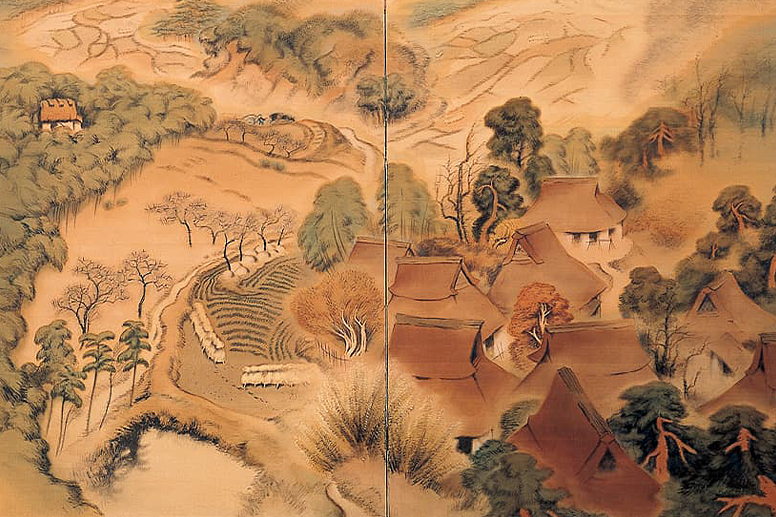
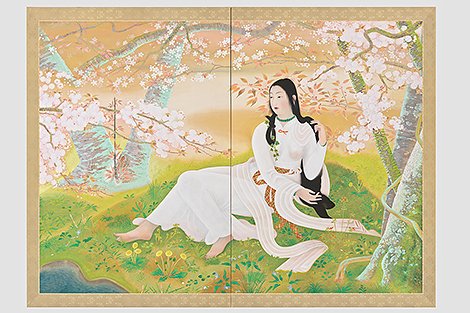
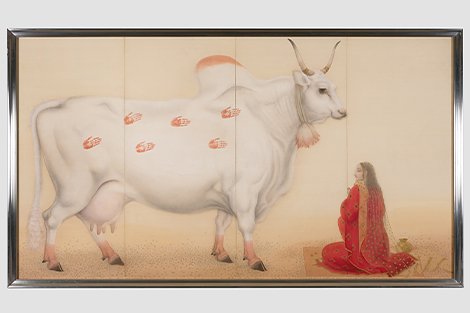
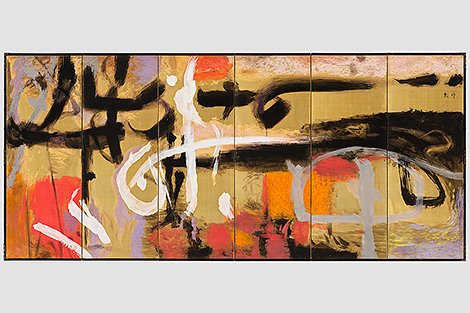
The museum exhibits Domoto’s work spanning his artistic lifetime of some 60 years, with his art scene debut work “Landscape of Fukakusa” (1919), “Princess Konohanasakuya” (1929) and “Wind God” (1961). During those years, he refused to be pigeonholed in one style, changing at will to express himself in new ways. Seeing those protean canvases side by side in the museum gives an extremely fascinating insight into the artist.
The collection amounts to some 2,600 pieces, ranging from traditional Japanese paintings to abstract works, and also including western paintings, sculptures, ceramics, dyed fabrics and industrial art. To show them all, they are regularly rotated in themed exhibitions. In addition, the museum also organizes special exhibitions of its own, offering visitors the opportunity to experience a wide range of art.
Facility Information
| Facility name | Kyoto Prefectural Insho-Domoto Museum of Fine Arts |
|---|---|
| Address | 26-3 Hirano Kamiyanagi-cho, Kita-ku |
| URL | https://insho-domoto.com |
| Contact | 075-463-0007 |
Please check each facility's website for opening hours, fees, and other details.