
A Historical Corridor from the Origins of Printing to the Modern Era
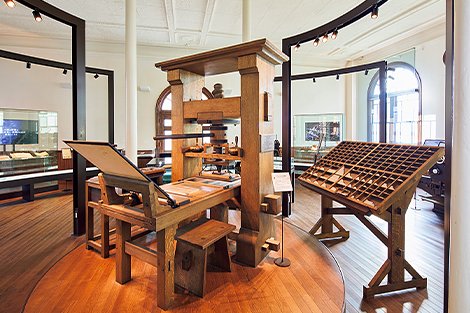
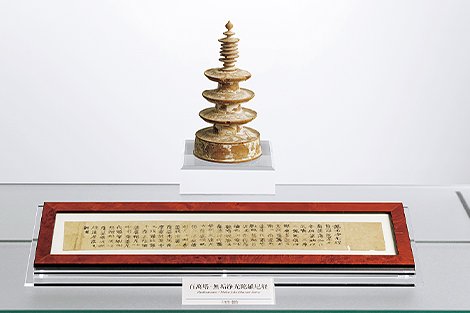
The Nissha Museum of Printing History presents a wide range of valuable materials, including 4,000-year-old cuneiform clay tablets, Hyakumanto-Mukujoko Daranikyo (an ancient Buddhist text and miniature pagoda from Nara period), the first edition of Kaitai Shinsho (New Text on Anatomy), a Senefelder lithographic printing press, a Heidelberg letterpress printing machine, a Gutenberg printing press (replica), and a facsimile edition of the 42-line Bible. These exhibits allow visitors to trace the development of printing from its earliest origins to the modern era.
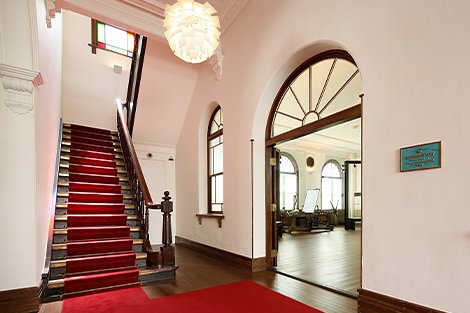
The museum features an exhibition room displaying architectural salvage materials from the Meiji era (preserved dismantled components). In addition, there is another exhibition space that showcases a collection of vintage Western typewriters and pencil sharpeners, where visitors can freely pick up and admire luxurious art books such as “Kokuho” (National Treasures), “Genshoku-ban Nihon no Bijutsu” (the Art of Japan in Color), and the “Le Louvre”.
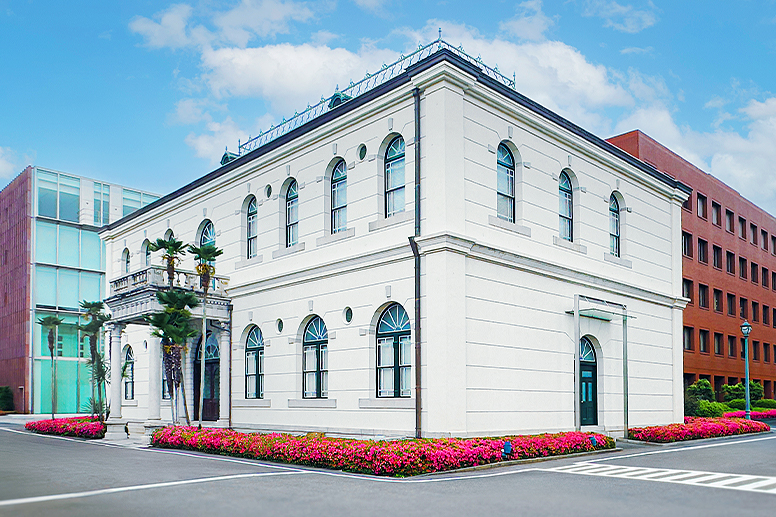
The Nissha Main Hall, which houses the museum, stands on the site of Suzaku-in, the residence of retired emperors like Emperor Uda and Emperor Murakami over 1,200 years ago during the Heian period. The building itself was constructed in 1906 as the headquarters of Kyoto Cotton Flannel, a spinning company that operated in this area. This historically significant brick structure from the Meiji era was registered as a National Registered Tangible Cultural Property in 2011.
Facility Information
| Facility name | Nissha Museum of Printing History |
|---|---|
| Address | 3 Mibu Hanai-cho, Nakagyo-ku |
| URL | https://www.nissha-foundation.org/ |
| Contact | 075-823-5318 |
Please check each facility's website for opening hours, fees, and other details.