
A villa castle at the very summit of Momoyama culture
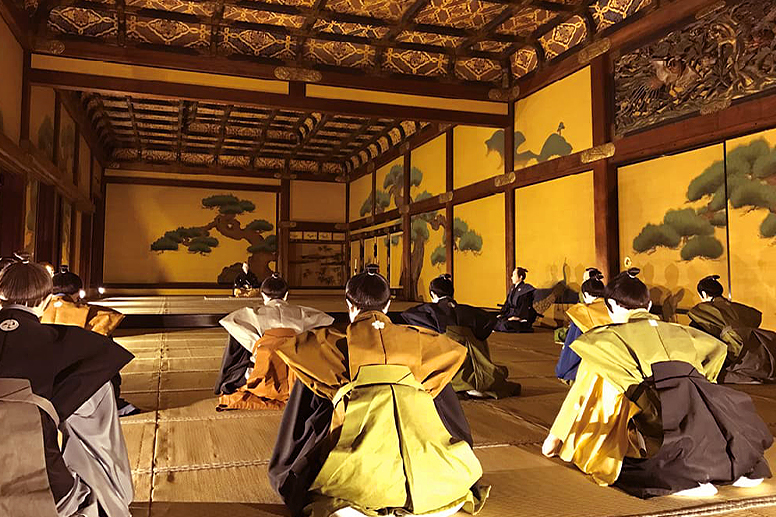
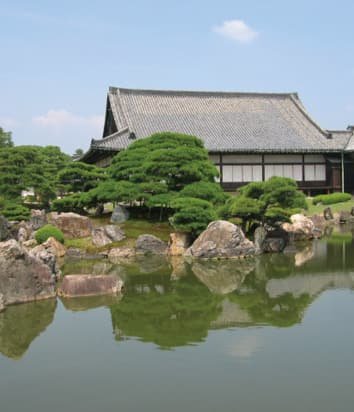
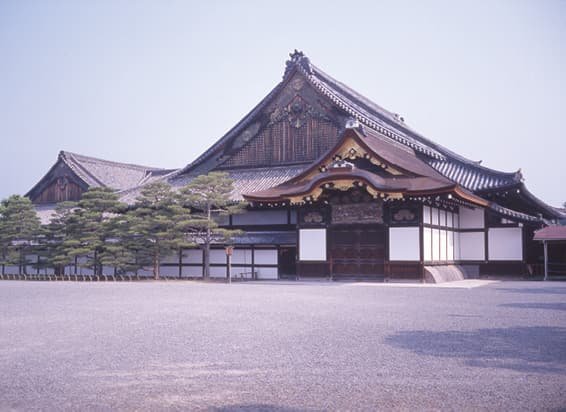
It was built in 1603 by Tokugawa Ieyasu as a guardian of the Kyoto Imperial Palace and as a lodging for the Shogun when he came to Kyoto. The third shogun, Iemitsu, expanded the castle to accommodate Emperor Gomizunoo's visit, and it was completed in 1626 (Kan'ei 3). You can see the splendor of Momoyama culture through architecture from the Keicho era (1596–1615), paintings, sculptures, and more. During the Meiji period, it became the Emperor's villa. The Ninomaru Palace, a national treasure, is a samurai-style building consisting of six buildings, and is extremely luxurious, with sliding screen paintings by Kano school artists, transoms, carvings, and decorative metal fittings. Nearby is the Ninomaru Garden, which is said to have been renovated by Kobori Enshu. The Honmaru Palace is an important cultural property, and will undergo full-scale repairs in March 2024, with the palace opening to the public in September of the same year. If you pass through the Honmaru Garden, which was remodeled by order of Emperor Meiji, and climb up to the remains of the castle tower, you can get a panoramic view of Mount Hiei and other sights. The castle gardens are filled with seasonal flowers such as cherry blossoms, plum blossoms, and azaleas, and you can also visit Seiryu-en Garden, which also features a teahouse. It was registered as a World Heritage Site in 1994.
Facility Information
| Facility name | Former Imperial Villa – Nijo-jo Castle |
|---|---|
| Address | Nijojo-cho Nijo-dori Horikawa-nishi-iru, Nakagyo-ku |
| URL | https://nijo-jocastle.city.kyoto.lg.jp/?lang=en |
| Contact | 075-841-0096 |
Please check each facility's website for opening hours, fees, and other details.